
A Decade of Research Across Brain Injury Models
AST-004 is arguably one of the most extensively researched investigational treatments now in clinical development for concussion and traumatic brain injury. Building on the first TBI publication in 20131, more than a decade of research has demonstrated reproducible efficacy across a wide range of experimental brain injury models, including blunt and blast trauma, mild to severe TBI, concussion, and repetitive injury paradigms, with consistent neuroprotective effects observed across species from rodents to two large-animal studies2-12. The consistency of benefit across diverse models and species suggests that AST-004 enhances a central neuroprotective mechanism that is broadly relevant to many forms of TBI and provides an unusually robust translational evidence base for a therapy entering Phase 2 clinical evaluation.
What Happens to the Brain After a Traumatic Brain Injury?
Traumatic brain injury is more than the initial impact to the head. In the hours and days following injury, a cascade of biological events can occur, including loss of cellular energy, disruption of the blood-brain barrier, brain swelling (edema), inflammation, and cell death. Injury to neurons and their supporting structures can also impair white matter integrity, disrupting communication between different regions of the brain. As brain cells become damaged, proteins such as GFAP can be released into the bloodstream, providing measurable indicators of injury severity. A distinguishing feature of the AST-004 research program is its extensive characterization of both efficacy and pharmacology, including dose-response relationships, receptor engagement, brain penetration, and the plasma, brain, and cerebrospinal fluid concentrations associated with neuroprotection.
How AST-004 Supports the Brain’s Intrinsic Protective Responses
AST-004 is designed to enhance the function of astrocytes, specialized cells that help maintain the brain’s stability and resilience after injury13-15. Astrocytes consume large amounts of energy to regulate water and ion balance, remove excess glutamate that can damage neurons, support the integrity of the blood-brain barrier, recycle neurotransmitters such as glutamine, and provide metabolic support to surrounding brain cells. Following TBI, these energy-dependent protective mechanisms can become overwhelmed, contributing to edema, inflammation, barrier disruption, and cell death. By increasing astrocyte energy metabolism and ATP production, AST-004 is designed to strengthen the brain’s natural repair and protective responses, helping to limit the secondary injury processes that drive neurological damage after trauma.
Large-Animal Evidence: Reduced Edema and Preserved White Matter
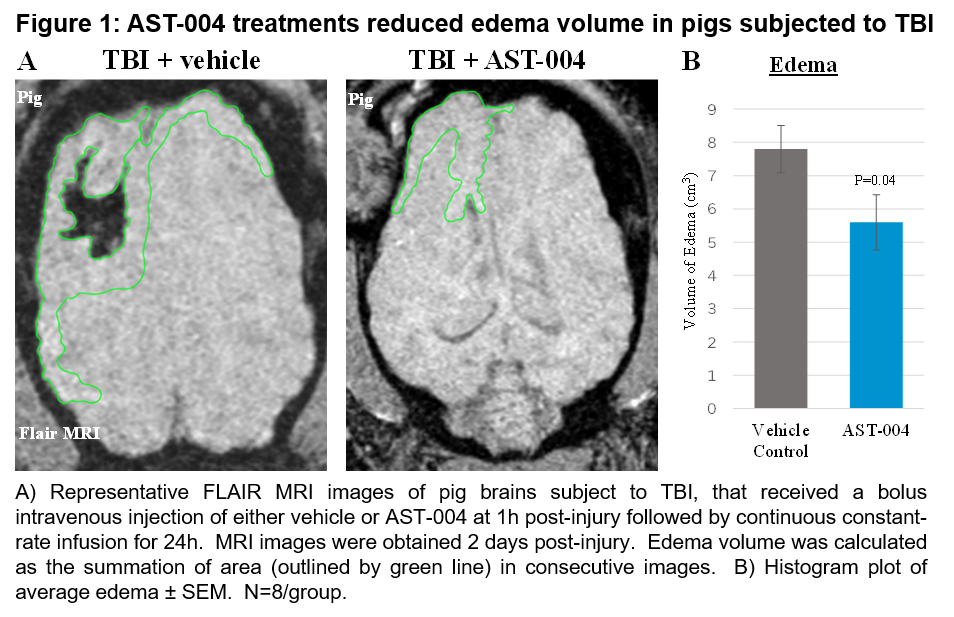
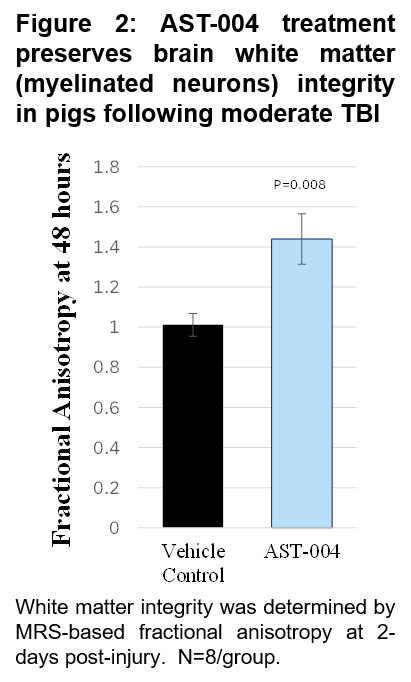
In a porcine moderate TBI study6, AST-004 reduced MRI-measured brain edema by 28% and reduced plasma GFAP levels by 43% compared with vehicle-treated animals (Figure 1). White matter integrity, measured by fractional anisotropy, was up to 42% higher in AST-004-treated animals (Figure 2), indicating reduced disruption of the brain’s communication pathways following injury. These findings are particularly important because pigs possess a gyrencephalic brain, characterized by folds and structural complexity that more closely resemble the human brain than the smooth (lissencephalic) brains of rodents. Demonstrating efficacy in this large-animal model strengthens confidence that the neuroprotective effects observed in preclinical studies will translate to the human brain.
Reducing Blood-Brain Barrier Damage and Cell Death After TBI
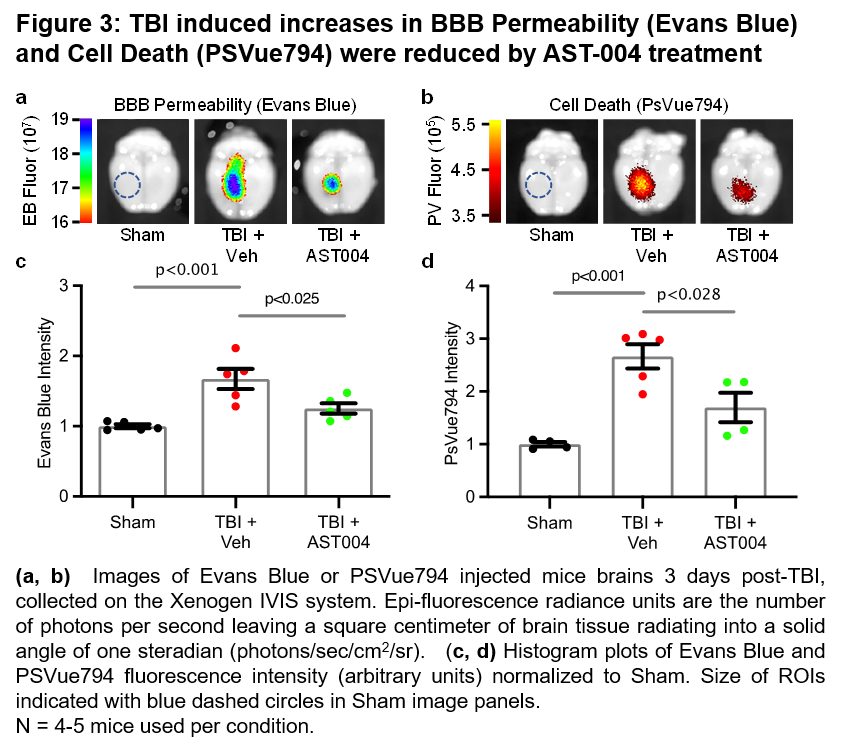
In a mouse model of moderate traumatic brain injury using the controlled closed cortical impact (CCCI) model8, animals received AST-004 treatment 30 minutes after injury. The study demonstrated multiple acute benefits, including reductions in blood-brain barrier disruption, cell death, glial activation, and injury biomarkers, along with increased astrocyte ATP-related signaling. As shown in Figure 3, AST-004-treated mice exhibited significantly less compromise of blood-brain barrier integrity 72 hours after injury, indicating improved preservation of this critical protective interface between the brain and bloodstream. Treated animals also showed significantly less cell death within the injured brain region, suggesting reduced progression of secondary tissue damage following trauma. Importantly, some benefits extended beyond acute injury markers, with improvements observed in selected behavioral measures four weeks after injury. Together, these findings demonstrate a coordinated neuroprotective effect across multiple biological and functional measures, providing compelling evidence that AST-004 helps preserve brain tissue and neurological function following TBI.
Advancing Toward Clinical Proof of Concept in Concussion and TBI
Taken together, these findings highlight the depth and breadth of the AST-004 research program, which has generated more than a decade of evidence across multiple traumatic brain injury models, species, and experimental settings. In addition to its extensive efficacy package, AST-004 has demonstrated a favorable safety profile in preclinical toxicology studies and in two Phase 1 clinical trials involving healthy volunteers11,16. Although the preclinical and early clinical results are promising, the ultimate measure of success will be whether these benefits can be reproduced in patients. To answer that question, AST-004 is now being evaluated in the Phase 2 STARFAST concussion study and the COSMOS mild complicated TBI study. These ongoing trials will determine whether the encouraging scientific foundation built over more than a decade can translate into the breakthrough treatment that concussion and TBI patients, families, and healthcare providers have long been seeking.